Decorative Plaster and Textured Wall Finishes
Loft or gallery mood, the concrete look gives a wall character — decorative plaster in Istanbul projects gives the space an identity.
- Concrete, Mineral and Textured Finishes, One Team
- Sample Panel Becomes A Contract Annex
- Natural Pigment Colour: Mixed Into The Body, Fade-Proof
- Protective Topcoat: Washable Surface
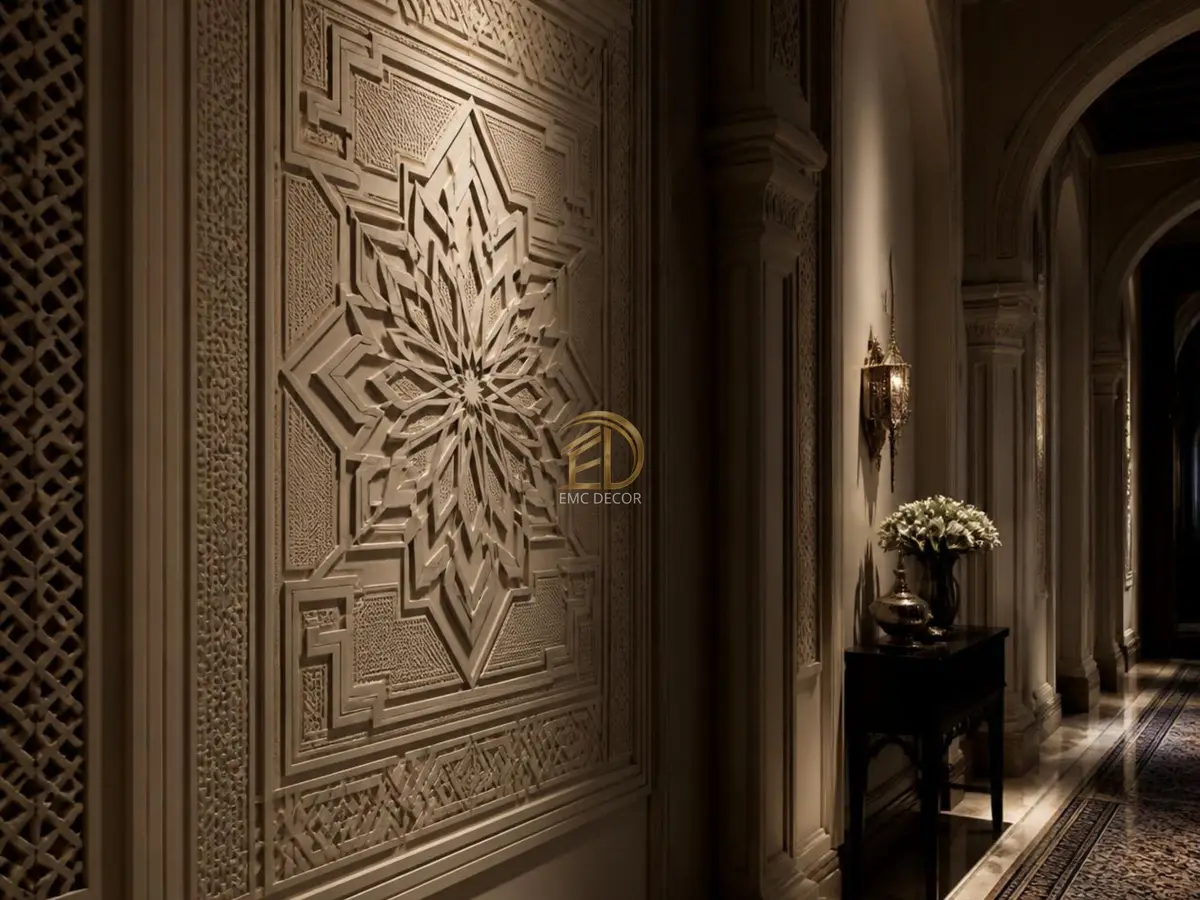
Decorative plaster delivers what flat paint can't: depth. The concrete look is the most requested finish of recent years — authentic industrial texture with trowel marks, without the cost and weight of real cast concrete. Mineral plasters, with their stone-dust body, create matte natural surfaces that shift with the light. This differs from Italian plaster's marble/stone-mimicking sheen — decorative plaster speaks through texture, not glassy polish.
Colours come from two palettes: the manufacturer colour catalogues (precise, standardised tones) and the natural palette (sand, stone and earth tones mixed as pigment into the material). A sample panel precedes every application; texture direction, depth and colour are attached to the contract as approved on the panel. Surfaces are delivered washable under a protective topcoat.
Why EMC Decor
Concrete, mineral, linear and wave textures — a wide technical range
Natural colour palette: pigment mixed into the body, fade-proof
Protective topcoat: washable, impact-resistant surface
The sample panel becomes a contract annex — the result matches it exactly
The Challenges You Face, Our Fix
RISK 01: The finished wall not matching the catalogue or reference photo
SOLUTION: Before full application, we prepare a sample panel in your room's own light for you to approve texture and colour.
RISK 02: High-touch surfaces like kitchens or hallways getting stained
SOLUTION: We seal the surface with epoxy or a protective wax layer, making the decorative plaster fully washable.
RISK 03: Trowel marks and layer joins looking random and uneven
SOLUTION: We plan texture direction and pattern layout in advance and apply corner-to-corner with a single dedicated artisan.
What This Service Includes
1. Texture & Colour Selection
Selection from the effect catalogue or natural palette, sample panel prepared in the room's light.
- Choosing concrete, mineral or textured effect
- Colour decision from catalogue or natural pigment
- Sample panel prepared under the room's own light
2. Surface Preparation
Truing, mesh reinforcement and bonding primer to give the decorative coat a solid base.
- Truing and smoothing the surface
- Mesh reinforcement where required
- Specialist bonding primer for the decorative coat
3. Decorative Coat & Protection
Texture coats applied by trowel/spatula, sealed with a protective topcoat for washability.
- Trowel/spatula application of texture layers
- Pattern direction kept faithful to the approved panel
- Epoxy or wax-based protective topcoat
RESULTS OF OUR WORK
Process
1. Texture & Colour
Selection from the effect catalogue, sample approved in the room's own light.
Duration: 2–3 days
2. Preparation
Truing, mesh reinforcement and bonding primer.
Duration: 1–2 days
3. Base Coat Drying
Primer and levelling coat cure, surface given a final check.
Duration: 1 day
4. Decorative Coat
Texture coats applied by trowel/spatula; pattern direction faithful to the panel.
Duration: 2–4 days
5. Protection & Handover
Protective topcoat and final inspection.
Duration: 1 day
Decorative plaster is priced per m² by technique; single walls welcome.
Get a Project EstimateFrequently Asked Questions
How does concrete-look plaster differ from real concrete?
Visually near-identical; technically it's a 3–5 mm coating — no structural load, applied to existing surfaces, colour-adjustable. Real board-formed concrete requires structural casting.
What's the difference between decorative plaster and Italian plaster?
Decorative plaster focuses on mineral, structural texture — concrete, stone dust, linear patterns — without claiming to mimic stone or marble. Italian plaster uses stucco/marmorino/travertino techniques to recreate marble and stone, aiming for a burnished, glass-like surface.
Can decorative plaster be painted over later?
Yes. Depending on the existing system, the surface can be recoloured while retaining the texture or levelled with a compatible skim coat before repainting.
Complementary & Recommended Services
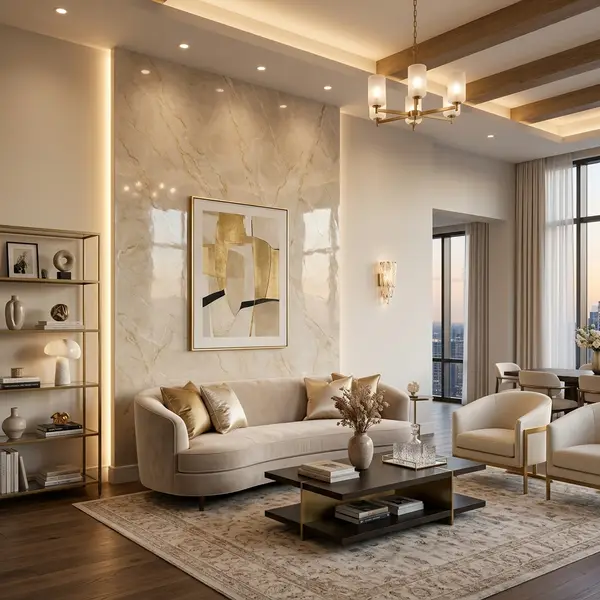
Italian Decorative Plaster and Polished Finishes
Italian plaster turns a wall into stone: lime-based material gains marble depth through trowel pressure and mastery.
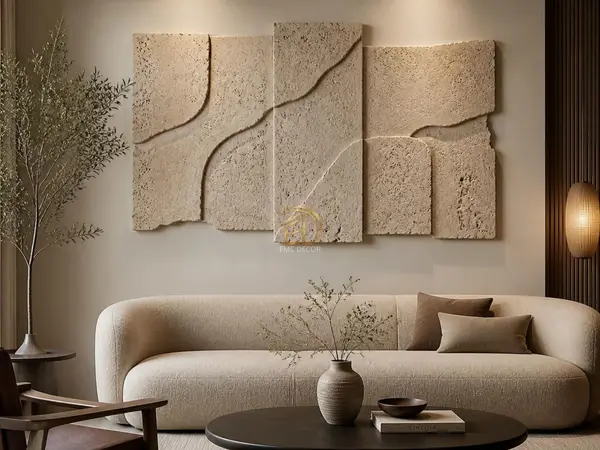
Decorative Wall Finishes and Cladding
One wall is the stage of the room: with texture, light and proportion set right, the wall speaks louder than the furniture — that's our specialism in Istanbul wall decor projects.
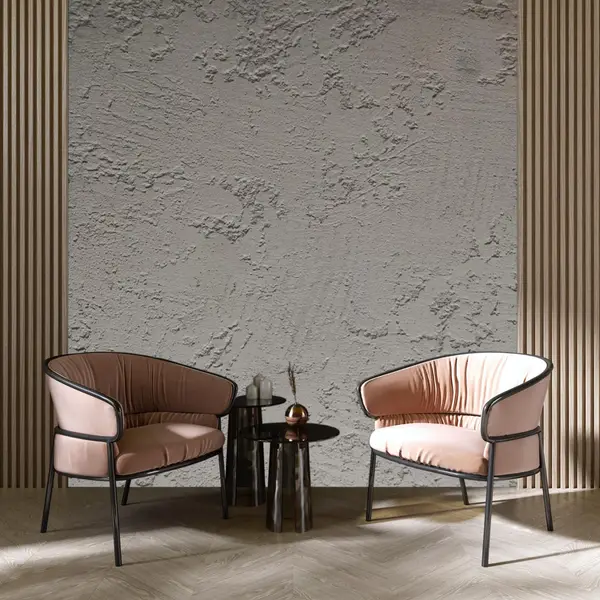
Italian Decorative Paint Finishes
Premium feature wall finishing using authentic Italian decorative lines (Novacolor, San Marco) creating velvet, metallic, microcement and silk textures.

Wall Plastering and Levelling
Base plaster applications that correct wall and ceiling geometry before paint or another finish.
Let’s Talk About Your Project
Get a free consultation: share the project details in the form or discuss them directly on WhatsApp.